
Becoming a pilot is a dream for many, but for those seeking to make it a reality, choosing a training provider with the right aircraft fleet for the type of pilot licence you want, can be a minefield for the uninitiated.
The short answer
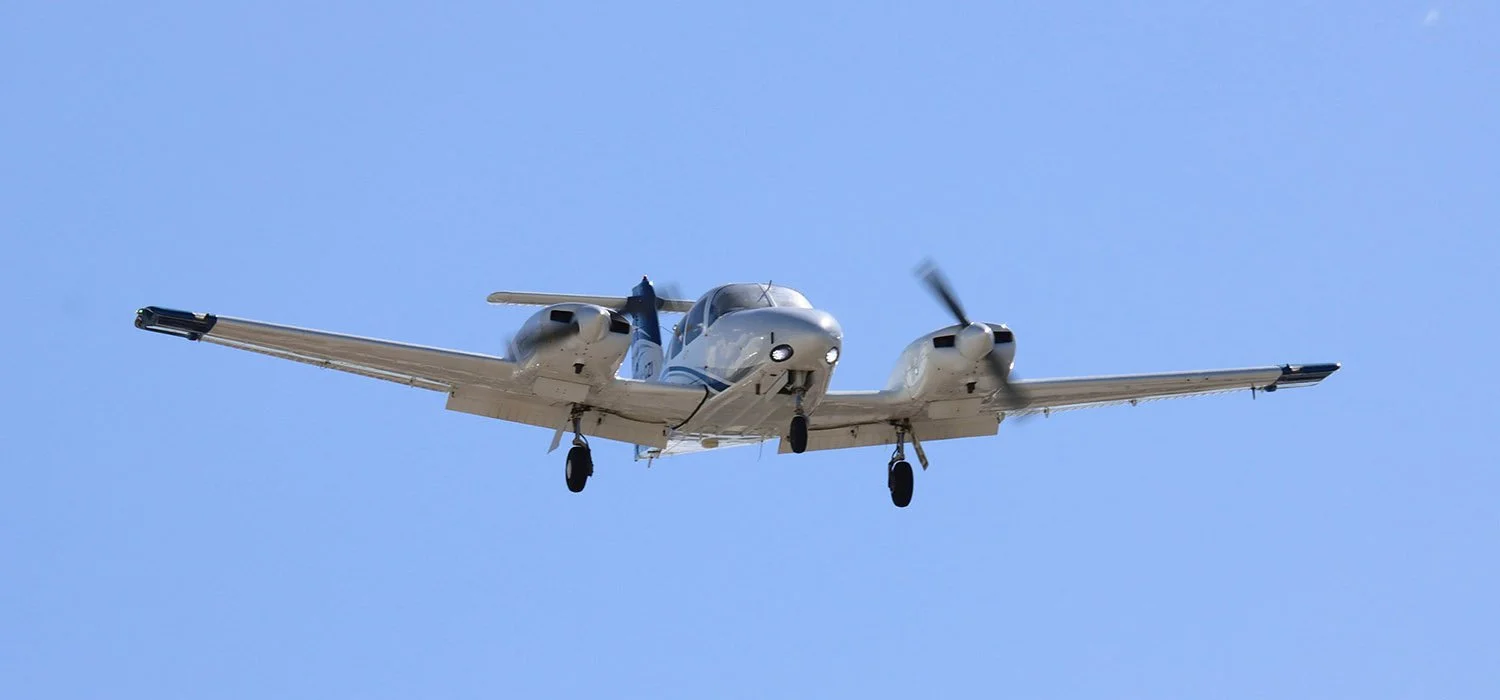
The Piper PA-44-180 Seminole is a four-seat, twin-engine training aircraft with two 180 hp Lycoming engines, counter-rotating propellers, retractable landing gear and a T-tail. It cruises at about 162 knots and has been in production since 1979.
It is one of the most widely used aircraft for multi-engine and instrument rating training. We fly 13 of them, with 6 based at Jandakot, the largest Seminole fleet in Perth.
Piper Seminole specifications
| Model | Piper PA-44-180 Seminole |
| Engines | 2 x Lycoming O-360 series, 180 hp each |
| Propellers | Counter-rotating, constant speed |
| Seats | 4 (pilot plus 3) |
| Cruise speed | About 162 knots (75% power) |
| Maximum speed | 168 knots |
| Rate of climb | 1,340 feet per minute |
| Service ceiling | 15,000 feet |
| Range | About 700 nautical miles |
| Maximum take-off weight | 3,800 lb (1,724 kg) |
| Fuel capacity | 110 US gallons (about 416 litres) |
| Landing gear | Retractable tricycle |
Figures are manufacturer and published reference specifications for the PA-44-180. Actual performance varies with weight, altitude and conditions.
Why is the Seminole used for pilot training?
Counter-rotating propellers
The two propellers spin in opposite directions, so neither engine is the "critical engine". That makes engine failure training more predictable for students while still teaching the full drill.
It teaches real multi-engine handling
Managing an engine failure, feathering a propeller and flying on one engine are the core skills of multi-engine flying. The Seminole lets students practise them in a forgiving, well-understood aircraft.
It is built for instrument flying
The Seminole is a common platform for the multi-engine instrument rating. Our newer aircraft have Garmin G1000 NXi glass cockpits, and our Frasca Seminole simulator can be set up as glass or analogue.
It is a proven, reliable trainer
The Seminole first flew in 1978 and is still in production. Flight schools around the world use it because it is predictable to fly and straightforward to maintain.
Is the Piper Seminole a complex aircraft?
Yes. Under US FAA rules it counts as a complex aircraft because it has retractable gear, flaps and controllable-pitch propellers.
In Australia, CASA does not use the term "complex". Instead, a pilot needs a multi-engine class rating plus design feature endorsements for retractable undercarriage and manual propeller pitch control, which are covered during multi-engine training.
Our Seminole fleet
Airflite operates 13 Piper Seminoles, built between 1997 and 2019. Six are based at Jandakot, the largest Seminole fleet of any flight school in Perth.
We are also an authorised Piper Service Centre, so every aircraft is maintained in-house. Less time waiting on outside maintenance means fewer cancelled lessons.
See the full fleet, including our Cessna 172s and 182s, on our aircraft fleet and simulators page.
Which courses use the Seminole?
- Professional Pilot Pathway: the multi-engine class rating, CPL flight training and instrument rating, with 100 hours of multi-engine flying.
- AVI50519 Diploma of Aviation (Instrument Rating): for pilots who already hold a CPL and want their multi-engine instrument rating.
- AVI50419 Diploma of Aviation (Flight Instructor): for pilots training to instruct.
Multi-engine command time is what charter operators and regional airlines look for. For how that flows through to pay, read our guide to pilot salary in Australia.
See the Seminole up close
Walk the hangar at Jandakot, sit in the aircraft and try the simulator at an Aviation Information Night.
Frequently asked questions
How many seats does a Piper Seminole have?
Four: the pilot plus three passengers. In training, the student sits in the left seat and the instructor in the right.
What engines does the Seminole have?
Two 180 hp Lycoming O-360 series piston engines, one of them a left-hand turning version so the propellers counter-rotate.
How fast does a Piper Seminole fly?
About 162 knots in cruise at 75% power, with a maximum speed of 168 knots.
Is the Seminole hard to fly?
It is designed as a trainer, so it is stable and predictable. The challenge is learning multi-engine procedures, which is exactly what it is built to teach.
What licence do you need to fly a Seminole in Australia?
At least a Private Pilot Licence with a multi-engine class rating and design feature endorsements for retractable gear and propeller pitch control. Flying it commercially needs a CPL, and flying it in cloud needs an instrument rating.
