
A Parent's Guide to Flight Training: Costs, Timelines and What Questions to Ask
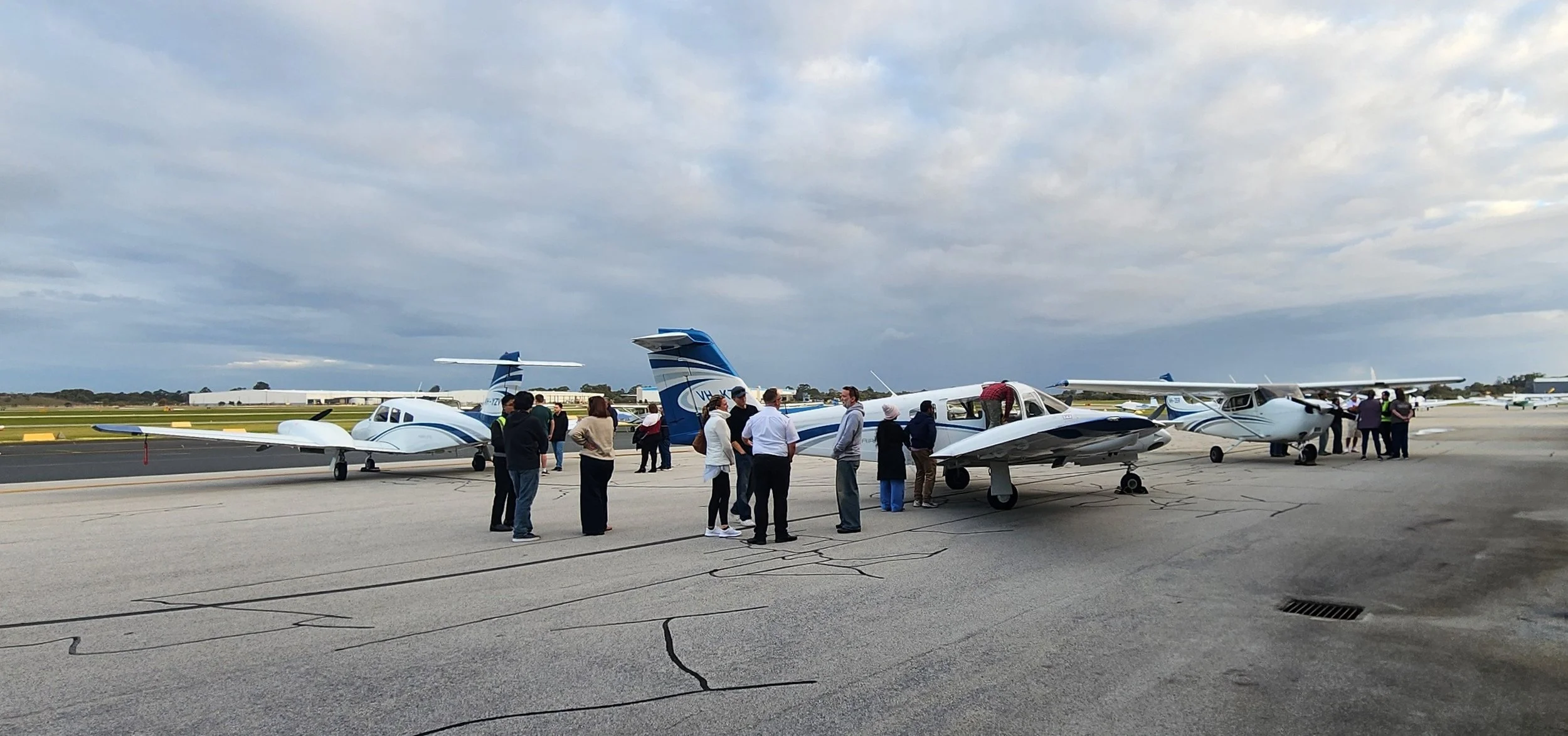
If your son or daughter has told you they want to become a commercial pilot, you are very likely already asking three questions: How much does this cost? How long does it take? And is it safe? This guide answers all three in plain English — because for most students aged 17 to 22, parents are the co-decision makers, and you deserve straight facts, not a sales pitch.
Here is the short version. A full Commercial Pilot Licence (CPL) with a Multi-Engine Instrument Rating typically takes 18 to 24 months of full-time training and represents a total investment in the range of $80,000–$120,000, part of which may be covered by a VET Student Loan (VSL).
Flight training in Australia is heavily regulated by the Civil Aviation Safety Authority (CASA), which governs instructor licensing, aircraft maintenance, and operational standards. The rest of this guide explains each of these points properly.
Attending an Aviation Information Night is the best first step. Parents and guardians are explicitly welcome at Airflite Flying College's Info Nights at Jandakot Airport. Register to attend an upcoming Info Night.
Why This Guide Is Written for You, the Parent
Most 17–22 year olds who enrol in professional flight training do so with a parent or guardian sitting beside them at the enrolment desk.
You are the one weighing the financial commitment, questioning the return on investment, and — quite rightly — worrying about safety.
That is completely reasonable. Aviation training is a significant investment of both money and years of your child's life. Our position at Airflite is simple: you should make this decision with full transparency.
The enemy is any school that "sells the dream and disappears." This guide gives you the questions and the facts to avoid exactly that.
The Flight Training Pathway Explained in Plain English
Professional pilot training is a stacked sequence of licences and ratings. Each stage has a purpose, a rough duration, and a qualification at the end. Here is how it works.
Stage 1: Recreational and Private Foundations
The student first learns to fly a single-engine aircraft (such as a Cessna 172) — take-off, navigation, landing, and airmanship. This builds the core stick-and-rudder skills every professional pilot needs.
Stage 2: The Commercial Pilot Licence (CPL — AVI50222)
This is the licence that legally allows your child to be paid to fly. It combines a nationally recognised qualification with the flight hours and CASA theory exams required for commercial operations. This is the foundational "command licence." Learn more: https://airfliteflyingcollege.edu.au/commercial-pilot-licence-diploma-avi50222
Stage 3: The Multi-Engine Instrument Rating (MECIR — AVI50519)
This is the qualification that transforms a CPL holder from "good weather only" into an all-weather, twin-engine pilot. Airlines care about one metric above almost all others: multi-engine command time. This rating is where employability is genuinely built. Learn more: https://airfliteflyingcollege.edu.au/aviation-instrument-rating-diploma-avi50519
Stage 4 (Optional): Flight Instructor Rating (AVI50419)
Many graduates become instructors first. It is a paid job that lets them build the flight hours airlines demand — a proven pathway into a career, not a detour from it.
Typical full-time timeline: 18–24 months from first lesson to a job-ready CPL + Instrument Rating. Learn more: https://airfliteflyingcollege.edu.au/flight-instructor-rating-diploma-avi50419
The Investment, Explained Honestly
The single biggest frustration in this industry is hidden cost. Families are quoted one figure and pay another — often 30% more. Here is the honest breakdown.
Realistic Total Cost
Private Pilot Licence (PPL) foundation: approximately $30,000–$40,000
Full CPL + Multi-Engine Instrument Rating pathway: typically $80,000–$120,000 total, depending on how efficiently the student progresses.
What a VET Student Loan (VSL) Covers
A VSL is a government loan (similar to HECS/HELP) that helps cover eligible tuition up to a capped limit. It does not cover the full cost of training. Read more: https://airfliteflyingcollege.edu.au/vet-loan-information
The "Gap Fee" and Out-of-Pocket Items
Gap Fee = Total tuition − VSL cap. This portion is paid by the family.
CASA theory exams: roughly $950–$1,800 per test, paid out of pocket.
Remedial hours: extra flight time if a student needs more practice than budgeted — this is where costs balloon at poorly run schools.
The key lesson for parents: The advertised "sticker price" is not the real price. Always ask a provider for the total realistic cost including exams and estimated remedial hours.
Aptitude Screening: Your Best Financial Safeguard
Here is a fact many schools will not volunteer: flight training has a high dropout rate. Students who lack the aptitude — or who were never properly assessed — often run out of money or motivation partway through, having spent tens of thousands with no licence to show for it.
This is exactly the risk you, as a parent, are most worried about.
How COMPASS/ADAPT Screening Protects Your Investment
At Airflite, prospective students undergo COMPASS/ADAPT aptitude testing before enrolment. These are the same categories of psychometric and coordination assessments used in professional aviation recruitment.
The purpose is straightforward: to confirm your child has a demonstrably high probability of completing the program within budgetbefore a dollar is committed. It reduces the risk of costly remedial hours and gives you evidence-based confidence — not a salesperson's optimism.
Safety: How Flight Training Is Regulated
Every parent asks about safety. It is the right question. Here is how the system is designed to protect your child.
CASA oversight: The Civil Aviation Safety Authority regulates every aspect of commercial flight training in Australia — from approved curriculum to operational procedures.
Instructor licensing: Every flight instructor must hold a CASA-approved Flight Instructor Rating and maintain currency. Instruction is not delegated to unqualified staff.
Aircraft maintenance standards: Training aircraft must be maintained to strict, documented CASA schedules. Airflite operates an in-house Piper Service Centre, meaning maintenance is controlled directly, not outsourced and hoped for.
Fleet redundancy: A larger fleet means a mechanically unavailable aircraft never grounds a student's training. Airflite operates the largest Seminole fleet in WA for exactly this reason.
Safety in aviation is a system, not a slogan. Regulation, qualified instructors, and disciplined maintenance work together.
What Does a Graduate's Career Actually Look Like?
The First Job
Most CPL + Instrument Rating graduates begin in one of two ways: as a flight instructor (building hours while being paid) or in regional charter and general aviation roles. Entry-level positions build the multi-engine command time airlines require.
The Longer Trajectory
From there, the path typically leads to regional airline first officer roles, then to major carriers. The industry rewards flight experience over academic degrees — which is why building genuine multi-engine hours early matters so much.
The Airflite Difference
Airflite is an aviation company that runs a flight school — not a flight school trying to understand aviation. It is the only college in Perth that employs its own graduates into its national operations. That means a genuine, in-house first step for the right students, not just a certificate and a handshake goodbye. Read more here: https://airfliteflyingcollege.edu.au/why-airflite-flying-college
What to Look for in a Flight School
Use this as a checklist when comparing providers:
Fleet size and redundancy — enough aircraft that a breakdown doesn't stall training.
In-house maintenance capability — direct control over aircraft airworthiness.
Scheduling structure — full-time, Monday–Friday programs maintain momentum and prevent students being "bumped" (a common problem at part-time legacy clubs).
Fee transparency — a written, total cost that includes exams and estimated remedial hours.
Aptitude screening — a school that assesses suitability before taking your money.
Instructor stability — permanent, employed instructors rather than a rotating cast of freelancers.
10 Questions to Ask on an Open Day or Info Night
Bring this list. A confident, well-run school will answer every question without hesitation.
What is the total realistic cost — including CASA exams and estimated remedial hours — not just the advertised tuition?
How much of that is covered by VSL, and what is the expected gap fee?
Do you conduct aptitude screening before enrolment, and what does it involve?
What is your student completion (non-dropout) rate?
How many aircraft are in your fleet, and what happens if one is unavailable?
Is your maintenance done in-house or outsourced?
Are your instructors permanently employed or contracted freelancers?
Is the program full-time, and how do you prevent scheduling delays?
How many multi-engine command hours will my child graduate with?
What employment support — or direct employment — do graduates receive?
Understanding the Dropout Risk Honestly
We will not pretend attrition doesn't exist. Across the industry, a meaningful proportion of students who begin flight training never finish — usually because of funding running out or a mismatch between ambition and aptitude that was never assessed early.
The good news is that this risk is largely manageable. Structured, full-time programs combined with upfront aptitude screening significantly reduce dropout rates.
When a student is properly matched to the program and progresses without long scheduling gaps, they finish on time and on budget. That is the entire logic behind Airflite's COMPASS/ADAPT screening and full-time model.
Frequently Asked Questions
How much does it cost to become a commercial pilot in Australia?
Expect a total investment of roughly $80,000–$120,000 for a full CPL and Multi-Engine Instrument Rating. A VET Student Loan can cover part of the tuition, but exams, remedial hours, and the gap fee are paid out of pocket.
How long does pilot training take?
Full-time training from first lesson to a job-ready CPL with Instrument Rating typically takes 18 to 24 months.
Is flight training safe?
Yes — it is one of the most heavily regulated training environments in the country. CASA oversees curriculum, instructor licensing, and mandatory aircraft maintenance schedules. Choosing a school with in-house maintenance and a large fleet adds further reassurance.
What is a VET Student Loan (VSL) and does it cover everything?
A VSL is a government loan that helps cover eligible tuition up to a capped limit. It does not cover the full cost — the difference (the "gap fee"), CASA exams, and any remedial hours are the family's responsibility.
What if my child isn't suited to flying?
This is exactly why aptitude screening matters. Airflite's COMPASS/ADAPT testing before enrolment helps confirm a strong probability of success before any significant money is committed.
Can parents attend the Information Night? Absolutely. Parents and guardians are explicitly welcome. As the co-decision maker, you should be there to ask questions and see the facilities firsthand.
Your First Step: Come and See for Yourself
You don't have to make this decision on brochures alone. The best thing you can do is visit, walk the 10,000sqm facility at Jandakot Airport, see the aircraft and simulators, and put your questions directly to the team.
Parents and guardians are warmly invited to Airflite's Aviation Information Nights. Bring your list of questions. We'll give you straight answers.
Register for the next Aviation Information Night at Jandakot Airport.
