
How Long Does It Take to Become a Pilot in Australia?
Key Takeaways
- A full-time integrated CPL and Instrument Rating programme takes approximately 65+ weeks from enrolment to graduation, assuming consistent scheduling and standard progress.
- Part-time modular training stretches the timeline to 2 to 3 years, and a university aviation degree typically takes 3.5 to 4 years.
- Budget your planning around 18 to 22 months rather than the optimistic 65-week baseline, since weather, airspace congestion and individual progress all add time.
- CASA's minimum of 150 flight hours for a CPL is rarely the real number. Most Australian graduates finish with 170 to 220 hours.
- Full-time training is a genuine full-time commitment, structured Monday to Friday. It is not compatible with an active FIFO roster.
- All three training routes lead to the same CASA licences, but earlier workforce entry through the integrated diploma means earlier multi-engine command hours, which is what actually drives airline progression.
Why the Timeline Question Matters More Than Most People Realise
When people ask how long it takes to become a pilot, they are usually asking two questions at once: how long until I can work, and what does my life look like while I am training? Both questions deserve a straight answer.
The timeline is not just a number on a brochure. It directly determines your financial planning, your living arrangements, your employment decisions, and in many cases, whether a full-time programme is even logistically possible at your current life stage.
The honest answer is more nuanced than most schools communicate upfront. Minimum CASA hours are not the same as real training hours. Scheduled weeks are not the same as productive flying weeks.
The difference between a well-structured academy programme and a loosely organised modular course can be 12 months or more of your life. This guide explains exactly what drives the timeline and what to plan for.
If you are still weighing up whether a pilot career is right for you in the first place, our guide on How to Become a Pilot in Australia is the best place to start before diving into timeline specifics.
The Direct Answer: How Long Does Each Route Take?
Here is a comparison of the three main training routes available to prospective commercial pilots in Australia.
| Training Route | Structure | Estimated Duration |
|---|---|---|
| Integrated CPL + IR Diploma | Full-time, Monday to Friday | ~65+ weeks |
| Modular / Part-Time Training | Self-paced, around employment | 2 to 3 years |
| University Aviation Degree | Full-time academic calendar | 3.5 to 4 years |
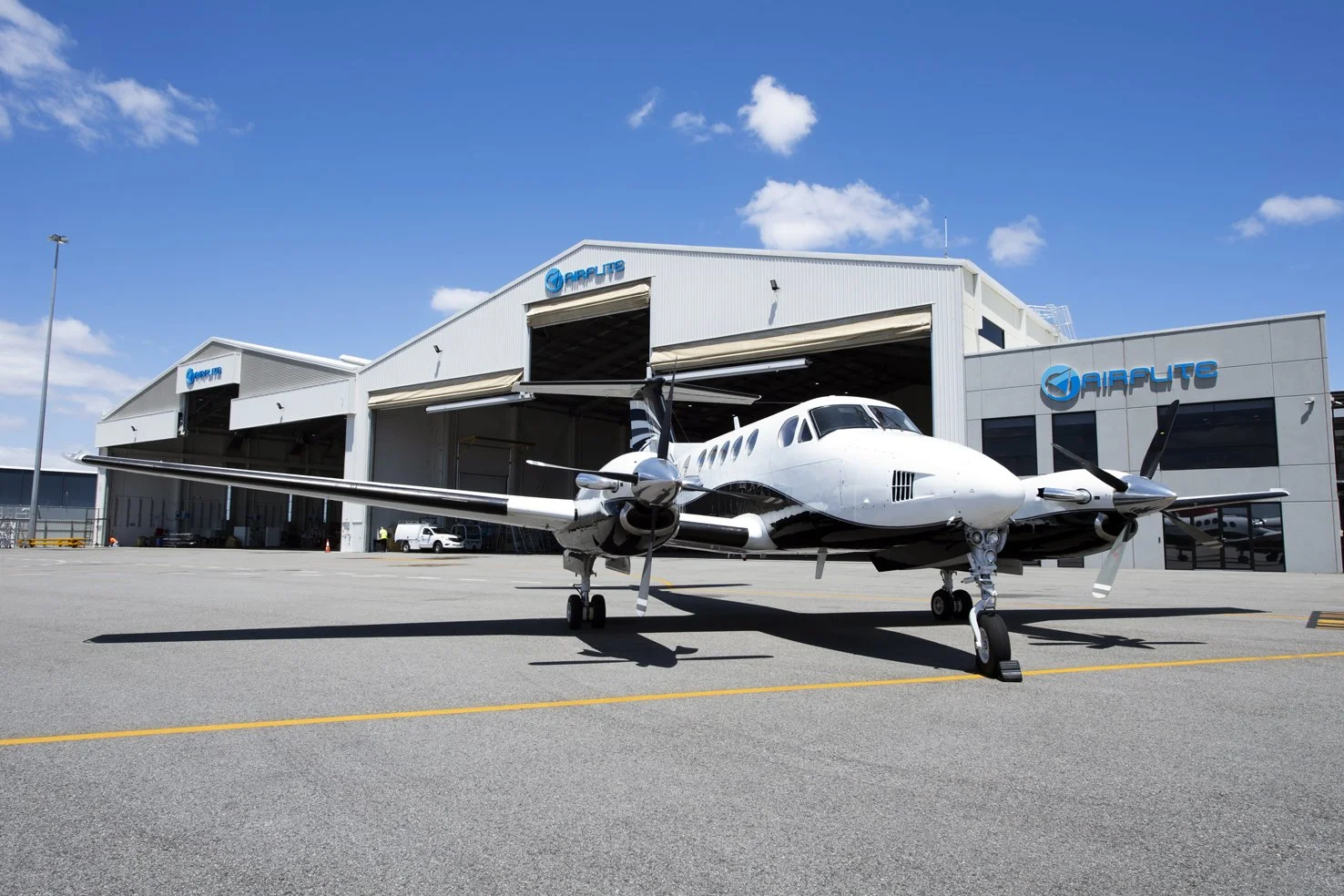
The integrated diploma is the pathway Airflite Flying College delivers through the Professional Pilot Pathway (AVI50222 + AVI50519).
It is structured as a continuous, full-time programme where theory and flight training run in parallel from week one, not sequentially. That parallel structure is a key reason why it is faster.
What Does the Pilot Training Timeline Actually Include?
The 65+ week estimate is not arbitrary. It maps to the defined phases of a structured commercial pilot programme. Understanding these phases helps you see where the time goes, and where delays are most likely to occur.
Phase 1: Ground Theory and Early Flying (Weeks 1 to 12)
The programme opens with concurrent ground school and initial dual flight training. Students work through the foundations of aerodynamics, air law, navigation and meteorology in the classroom while logging their first flight hours with an instructor in the circuit.
This phase establishes the cognitive framework that makes flight training stick. Students who rush this phase or arrive without it tend to accumulate remedial hours later, which adds both time and cost.
Phase 2: Solo Consolidation and PPL Standard (Weeks 12 to 26)
Once an instructor signs off your solo endorsement, you begin logging solo hours in the training area and local circuits. This phase develops command authority: the ability to manage the aircraft, navigate, and make decisions independently.
The PPL skill test is the milestone that closes this phase. Passing it confirms you are operating at Private Pilot Licence standard and unlocks the next stage of the programme.
Phase 3: CPL Cross-Country and Advanced Flying (Weeks 26 to 45)
The Commercial Pilot Licence phase involves more complex navigation, higher performance aircraft, and the development of precision flying skills to commercial test standards. Students complete long-distance cross-country flights, consolidate night flying endorsements, and continue working through CASA theory examinations.
This phase is where individual progress variation becomes most visible. Students with strong theory preparation and consistent flight scheduling tend to advance quickly.
Those managing external pressures, such as work commitments, study fatigue or weather-disrupted schedules, can see this phase extend by weeks.
Phase 4: Instrument Rating and Multi-Engine Training (Weeks 45 to 65+)
The Instrument Rating (AVI50519) is the most technically demanding phase of the programme. Students transition to Piper PA-44 Seminole aircraft with glass cockpit avionics and begin flying under simulated and actual instrument conditions, navigating via IFR procedures through controlled airspace.
Simulator sessions on Frasca systems run alongside aircraft flying during this phase, allowing students to build instrument scan and procedure skills efficiently before applying them in the aircraft. The MECIR (Multi-Engine Command Instrument Rating) skill test is the final gate.
Why CASA Minimum Hours Rarely Equal Your Actual Hours
This is the single most important piece of financial and timeline planning information a prospective student can receive, and it is consistently under-communicated by schools that lead with minimum figures.
CASA mandates a minimum of 150 flight hours for CPL issue. This is the legal floor, not the typical outcome.
In Australia, the average CPL graduate completes training with 170 to 220 flight hours, depending on the school, the student, and the operating environment.
Several factors push real hours above the minimum:
- Weather: Jandakot Airport operates in Perth's general aviation airspace. While Perth enjoys more flyable days than most Australian cities, weather holds, crosswind limits and reduced visibility still disrupt schedules. Conservatively, expect 10 to 15 percent of planned flying sessions to be weather-affected across a full programme.
- Airspace congestion: Jandakot (YPJT) is one of the busiest general aviation airports in Australia. Circuit training periods involve genuine ATC interaction and can run longer than the allocated slot on busy days.
- Individual progress: Some manoeuvres and procedures require additional dual instruction before a student is ready to proceed to the next phase. This is normal. Pre-entry aptitude screening, such as COMPASS/ADAPT testing, helps identify and reduce this risk, but it does not eliminate variability entirely.
- CASA examination scheduling: Students must pass all required theory examinations before sitting their skill tests. If a theory resit is required, the timeline extends accordingly.
What this means for planning: budget your timeline around 18 to 22 months for full programme completion, not the minimum legislative figure. The 65+ week structure accounts for standard variability, but personal circumstances, seasonal weather patterns, and examination outcomes will determine whether your journey runs closer to 16 months or 24.
What Does "Full-Time" Training Actually Look Like Day-to-Day?
When Airflite Flying College uses the term full-time, it means a structured, Monday to Friday programme operating between 09:00 and 17:00 at the Jandakot Airport facility. It is an academy model, not a turn-up-when-you-can aero club arrangement.
A typical full-time training week includes:
- Scheduled ground school sessions: structured theory classes covering the CASA examination syllabus
- Dual flight briefings: pre-flight and post-flight analysis sessions with your assigned instructor
- Allocated flight slots: booked in advance against the school's own fleet schedule
- Simulator sessions: Frasca simulator time, particularly during the instrument rating phase
- Self-directed study: theory revision, flight planning, and examination preparation outside of contact hours
This structure exists because training momentum is a measurable factor in pilot performance. Research in aviation education consistently demonstrates that students who maintain regular, closely-spaced training sessions retain procedural skills more effectively and require fewer remedial hours than those training sporadically.
At Jandakot, where an in-house fleet of 13 Piper Seminoles and multiple Cessna 172/182 aircraft are maintained and scheduled internally, the full-time model is operationally supportable in a way that it simply is not at smaller operations.
The practical implication is that full-time training is a full-time commitment. Students who attempt to hold down part-time employment alongside a full-time programme consistently report elevated stress, compromised study outcomes, and extended training timelines.
The programme is designed to be your primary occupation for its duration.
Can I Train While Working a FIFO Roster?
This is one of the most common questions Airflite receives, particularly from career changers in Western Australia where FIFO employment is widespread. The direct answer is: not on a full-time integrated programme.
A FIFO roster, whether 2:1, 8:6, or any other rotation, creates exactly the scheduling pattern that undermines full-time training momentum. Returning from a swing after 8 or 14 days away means restarting the neural consolidation of flight procedures from a lower baseline. Instructors observe it. Logbooks record it. Skill test outcomes reflect it.
There are two practical options for FIFO workers pursuing a pilot career:
- Delay and commit fully. Many career changers save aggressively for 12 to 18 months on a FIFO income and then resign to undertake full-time training. The accelerated timeline and reduced remedial hours typically make this more cost-efficient than attempting to train around a roster.
- Begin with theory only. CASA ground school subjects can be studied independently and examinations sat without a training enrolment. Some students complete two to four theory exams before beginning flight training, which shortens the in-school timeline and reduces the Gap Fee exposure period.
What does not work, and what will cost you significantly, is enrolling in a full-time programme while maintaining active FIFO employment. The maths on remedial hours and extended enrolment periods are unforgiving.
Integrated Diploma vs Modular Training vs University Degree: A Detailed Comparison
Integrated CPL + IR Diploma (~65+ Weeks, Full-Time)
The integrated diploma is purpose-built for commercial aviation outcomes. Theory and flight training run concurrently from the first week. The qualification stack, AVI50222 (CPL) and AVI50519 (Instrument Rating), is exactly what airlines look at when reviewing first officer applications.
Modular Training (2 to 3 Years, Part-Time)
Modular training involves completing licences sequentially: RPL, then PPL, then CPL theory, then CPL flight hours, then Instrument Rating, often across multiple schools or time periods. This approach suits students who cannot commit full-time, but the timeline extends considerably.
University Aviation Degree (3.5 to 4 Years)
University programmes combine academic study with flight training components, typically leading to both a Bachelor's degree and the CASA CPL/IR endorsements. The academic calendar structure, including semesters, examination periods and semester breaks, extends the overall timeline.
Frequently Asked Questions
In theory, yes, if weather is favourable, you progress at an above-average rate, and you pass every theory examination first time. In practice, very few students complete below the 65-week benchmark on a full-time programme, and planning around a shorter timeline introduces financial risk if it does not eventuate. Treat 65 weeks as the optimistic baseline, and 18 to 22 months as the realistic planning figure.
Yes. The Airflite Professional Pilot Pathway integrates the AVI50222 (CPL) and AVI50519 (Instrument Rating) into a single continuous programme. The 65+ week estimate covers the full qualification stack, not just the CPL component.
You can begin dual flight instruction at any age, but CASA requires you to be at least 15 to fly solo and 17 to hold a Private Pilot Licence. To sit the CPL skill test, you must be at least 18. Practically, most full-time students begin their integrated programme at 17 to 18 to align with these milestones.
On a full-time programme, flight slots are typically scheduled 3 to 4 days per week alongside ground school days. Weather holds and maintenance days mean actual flight frequency varies week to week. The structured timetable manages this, but students should expect some weeks to be heavier on theory and lighter on flight hours, and vice versa.
Directly, yes. CASA requires all relevant theory examinations to be passed before a skill test can be sat. If a resit is required, examinations can be re-sat with no limit on attempts, but the skill test is deferred accordingly. Strong theory preparation reduces this risk significantly. Airflite's integrated ground school is structured to match theory subjects to the relevant flight training phases so that students are sitting examinations when the content is most immediately reinforced by flying.
Life interruptions happen. Flight schools should have a documented deferral or suspension-of-enrolment process. The key concern from a training perspective is skills currency. An extended break, typically more than four to six weeks away from flying, will require dual consolidation hours upon return to bring skills back to standard. Budget for this possibility when planning your overall timeline.
Understanding the general picture is step one. The next step is looking at exactly how the Professional Pilot Pathway at Airflite Flying College is structured, phase by phase, week by week.
View the Professional Pilot PathwayIf you want to ask questions directly, about the schedule, the fleet, what a typical training week looks like, or whether your specific situation suits a full-time programme, the most efficient way is to attend an Aviation Information Night at our Jandakot Airport facility.
Airflite Flying College has trained commercial pilots at Jandakot Airport since 1981. Our timeline guidance is based on actual programme delivery data and the realities of operating at one of Australia's busiest general aviation airports, not minimum legislative figures.
